
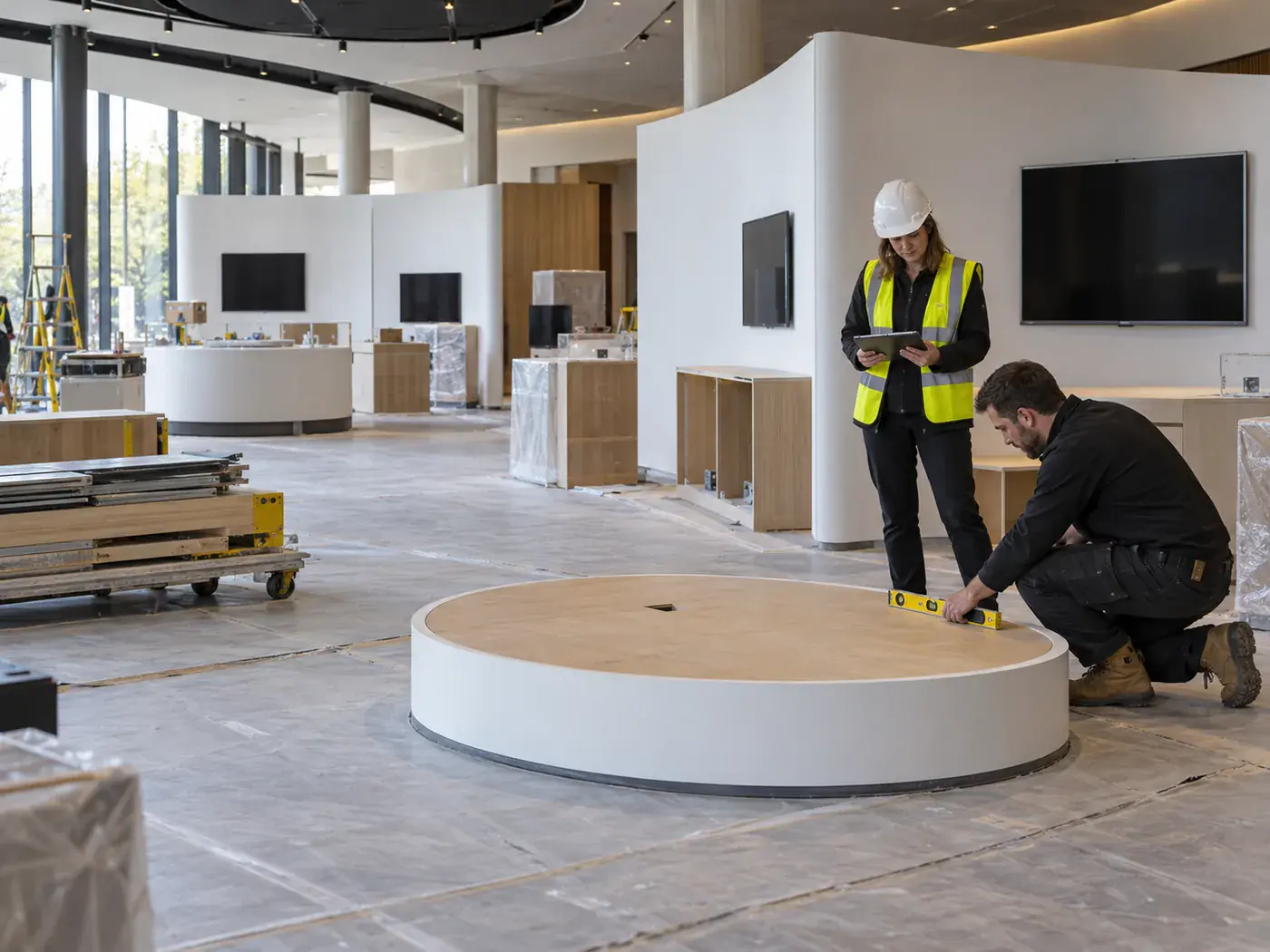
Define the conversation the space needs to support
Start with the visitors. Are they customers, partners, employees or public audiences? Decide what they should understand by the end of the visit and what the next conversation should be about.
This creates a basis for choosing the content. A company introduction, a product discussion and a detailed process explanation may need different levels of information. Not every message needs a screen, and not every product needs an interactive exhibit.
Establish what is known about the site
Gather the floor plan, current site photographs and any available building information. Identify access conditions, existing services, usable heights and interfaces with the wider building team.
For display equipment, viewing distance, ambient light, image shape and maintenance access matter as much as the visible screen size. Power and signal routes also need a place in the design conversation.
Separate the scope into clear responsibilities
A showroom may involve the client team, a design agency, a construction contractor, content producers, equipment suppliers and other specialists. Before detailed work begins, record who provides information, who reviews it and who is responsible for each interface.
If your concept is already developed, bring the current drawings and design standards. If it is still early, explain the purpose, reference direction and constraints. The starting package should match the actual project stage.
Plan content reviews before production
Technical content needs a named business reviewer. Brand and language decisions also need a clear approval route. For multilingual exhibitions, agree terminology and keep versions identifiable across screen layouts, subtitles and interactive interfaces.
Review the narrative, script and key visuals before detailed production where practical. A late change to an approved product explanation may affect several media outputs, not just a single paragraph.
Connect media decisions to physical conditions
Decide what each medium contributes. A film may establish context; a touchscreen may support exploration; a physical product may carry the most direct explanation. Content resolution, aspect ratio, sound and interaction should be planned for the actual display conditions.
Discuss how the space should operate during normal use, after a restart and when network access is unavailable. Requirements for local playback, authorised maintenance and control should be defined for the project rather than assumed.
Build a programme around decisions and dependencies
A useful programme includes site review, detailing, samples, fabrication, installation, content production, system testing and client review. Some activities can overlap; others depend on a decision or a completed input.
Share the intended opening window and any fixed building or event dates. The delivery team can then review the scope and dependencies before proposing a programme. A general construction estimate is not the same as a complete project duration.
Agree what handover means
Define the acceptance process and the records needed to operate the exhibition. Depending on scope, these can include system test records, as-built drawings, equipment and material lists, operating guidance, training and maintenance contacts.
Also agree the content deliverables and usage rights. Final films, editable design files, software and third-party material have different requirements; they should be described in the project agreement.
What to send in an initial enquiry
A short description of the project is enough to start. Include the location, type of space, intended audience, current design stage and target opening window. Add the available floor plan and reference material through an agreed exchange method.
If a budget range is available, sharing it helps the discussion focus on a suitable scope. If some information is still being developed, identify what is known and which decisions remain open.
Planning with DASHI DIGITAL
We connect showroom construction, multimedia integration and digital content for projects in China. Tell us where your project stands, and we can discuss the next scope of work.
Before your first discussion
Helpful Information
to Have Ready.
These details help us prepare a more focused discussion.
- Location (city / venue if known)
- Plans (if available)
- Audience (target visitors)
- Design stage
- Target opening window
- Budget range (if available)
The final scope and programme depend on your project and site conditions.