
Buying custom exhibit fabrication in China requires more than a reference image and an overall dimension. A supplier needs to understand what the exhibit must display, how visitors and staff will use it, and how it connects to the showroom. A useful procurement brief makes the item measurable without pretending that every detail has already been resolved.
Create one record for each exhibit
Give every cabinet, plinth, model, graphic structure or interactive housing an identifier shared by the plan and exhibit schedule. Record its intended location, overall size, display purpose, proposed materials and the items supplied by the client. Identify dimensions and material choices that still need confirmation.
Describe the products or samples that the exhibit must hold. Their size, weight, handling requirements and replacement method affect the design of the support. For the relationship between small technical products and explanatory media, see the published OFILM showroom photographs.
Define appearance and function separately
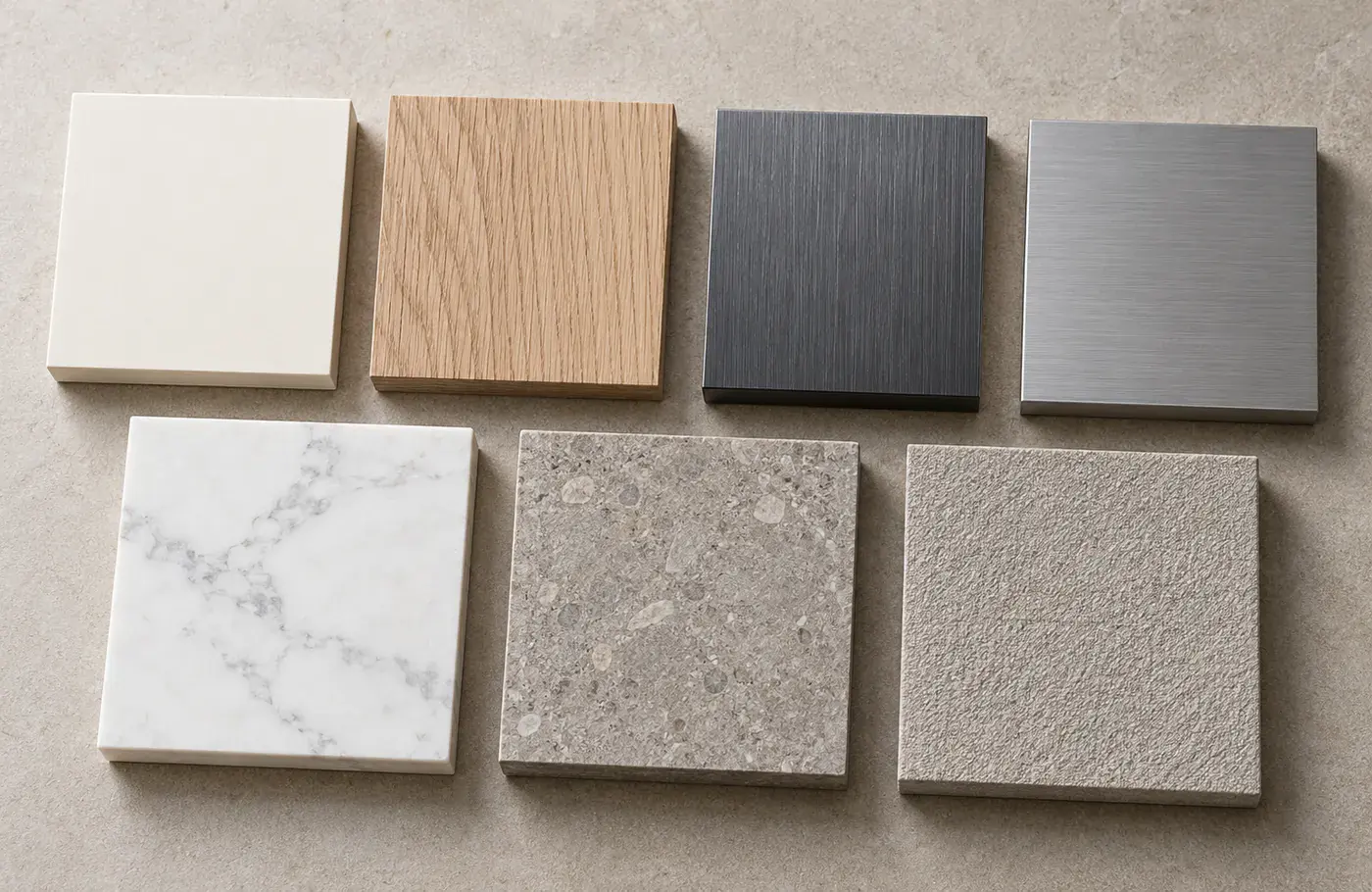
An appearance reference explains an intention; it may not define construction, finish consistency, concealed access or long-term use. Give the supplier a finish schedule and identify the details that matter most at normal viewing distance. State whether visitors may touch, operate or move any part of the exhibit.
- What must the visitor see clearly, and from which positions?
- Which products or panels need changing after installation?
- What equipment, lighting or cable routes sit inside the exhibit?
- How will staff reach serviceable parts?
- Which surfaces need representative samples before approval?
Choose the right review sample
| Review item | What it can establish | What still needs checking |
|---|---|---|
| Finish sample | Colour, texture and an agreed surface reference. | The complete assembly, substrate, joins and lighting conditions. |
| Representative detail | A specific junction, edge, mounting or access arrangement. | How it repeats across the full exhibit. |
| Prototype or mock-up | Selected questions about scale, usability or construction. | Whether the final production version includes the approved changes. |
Agree what each review is intended to answer, who approves it and how the approved reference is recorded. Avoid using a sample approval as a substitute for reviewing the other relevant drawings and interfaces.
Plan transport and installation before fabrication
The assembled exhibit needs a route from the fabrication location to its final position. Discuss access sizes, handling, packaging, assembly sequence, site protection and the responsibilities of other contractors. Large or delicate components may require a different breakdown from the first visual concept.
If items are intended for delivery outside China, discuss destination information, packaging and installation responsibilities specifically. Do not assume that an on-site China installation proposal includes overseas logistics, local work or destination requirements.
Compare quotations against the same acceptance brief
Request a breakdown that separates fabrication, samples, graphics, equipment, transport and installation where relevant. Ask what is excluded or provisional. Equipment supplied by another party still needs an agreed interface with the fabricated housing.
Acceptance should refer to the approved item schedule, drawings, finishes and operating requirements. Record how visible defects, fit, access and agreed functions will be reviewed. Capture changes and unresolved items before the exhibit is accepted, rather than relying on a general statement that it is complete.
Start a fabrication enquiry with a defined package
DASHI DIGITAL can discuss custom exhibit fabrication as part of showroom delivery or a defined package for an existing project. Share the exhibit list, project city, available drawings and installation setting. Add the review milestones and opening window so the first proposal can identify the decisions that affect production.
For a broader contractor appointment, read the existing-design fit-out guide. For equipment interfaces, use the showroom AV request-for-quotation guide.
Before your first discussion
Helpful Information
to Have Ready.
These details help us prepare a more focused discussion.
- Location (city / venue if known)
- Plans (if available)
- Audience (target visitors)
- Design stage
- Target opening window
- Budget range (if available)
The final scope and programme depend on your project and site conditions.