
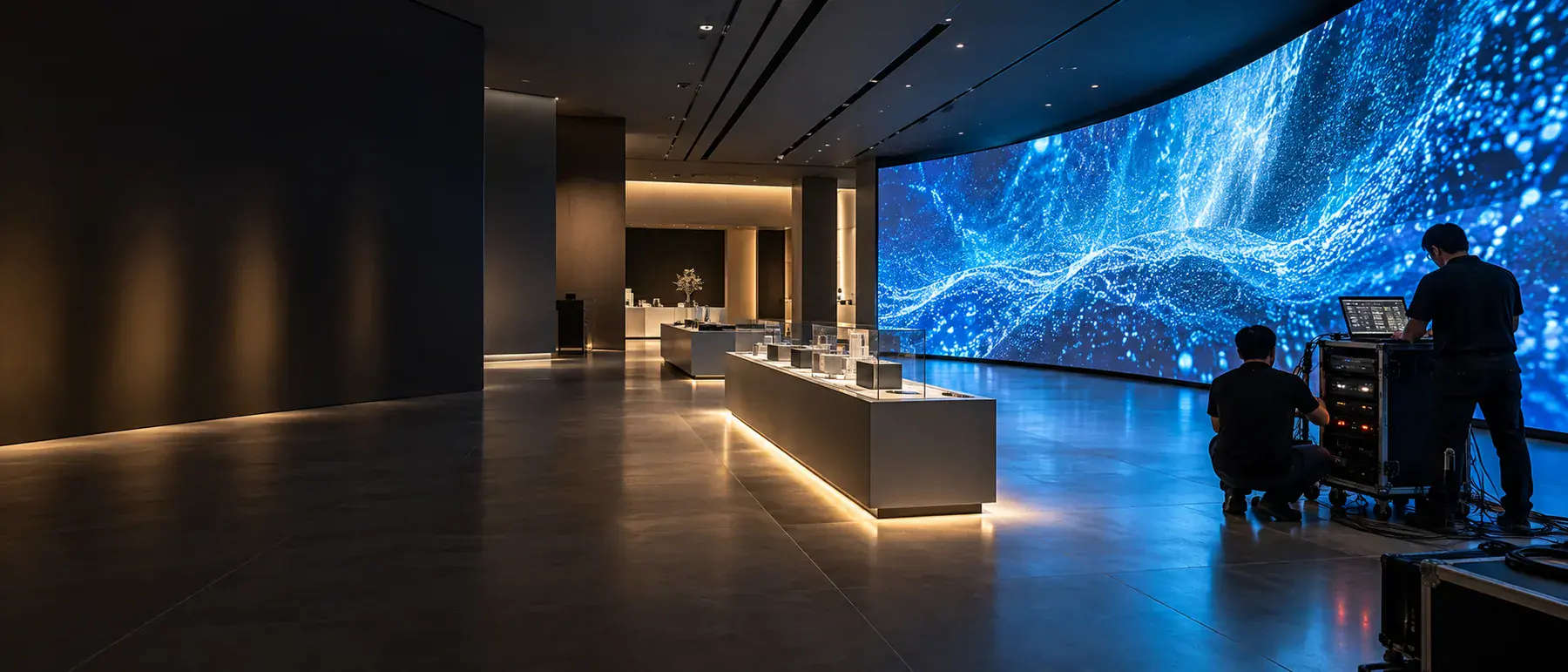
A showroom AV system integration quotation should explain how visitors and staff will experience the space, not only which devices will be purchased. Screens, playback, sound, lighting interfaces, interactive software and control can cross several supplier boundaries. A clear request for quotation makes those boundaries visible before equipment is selected.
Write an operating sequence for each visitor scenario
Describe what happens when the showroom opens, when a guided group arrives, when a visitor interacts independently and when the space closes. Identify which actions are automatic and which are controlled by a host. Include what should happen after an interrupted presentation or a period without interaction.
Give each zone a content purpose and an intended audience. A product explanation may need spoken guidance, while another zone may be used silently beside a meeting area. Those differences affect the proposed sound, display, playback and control arrangements.
Separate the equipment schedule from integration work
| RFQ section | Information to request |
|---|---|
| Displays and sound | Proposed devices, viewing and listening assumptions, installation interfaces and access. |
| Playback and control | Content sources, operating sequences, user controls, restart behaviour and system dependencies. |
| Infrastructure | Power, cabling, network requirements, equipment locations and responsible parties. |
| Content and software | Included production, adaptation, licences, interfaces and update arrangements. |
| Testing and handover | Demonstration scenarios, issue records, training and operating documents. |
Ask suppliers to identify client-provided equipment and work by the fit-out or IT contractor. A device being included does not automatically mean its mount, cabling, media production or integration is included.
Agree the network and content assumptions early
State whether the proposed experience must operate without an internet connection. Identify any data, login, remote management or network access that depends on the client’s IT policies. Ask which functions remain available if an external service is unavailable and which require a supported connection.
Provide an initial media list with languages, display formats and source ownership. Confirm who adapts existing files and who approves the final versions. The construction and multimedia coordination guide is useful when screens and content are being developed alongside the fit-out.
Turn “working system” into demonstration criteria
List the operating scenarios the team needs to demonstrate in the installed space. These might include starting the agreed presentation, switching zones, using the host controls, returning an interactive to its start screen and recovering from an agreed interruption. Relevant tests depend on the system; they should be proposed and agreed for the project.
Request an issue list that distinguishes a content revision, an equipment fault and a coordination problem. Name the party responsible for resolving each issue and define how the final accepted versions will be recorded. A successful device power-on is not the same review as an integrated visitor experience.
Include the operating team’s needs in the quotation
Ask what training, diagrams, device schedules, software information and maintenance instructions will be handed over. Discuss licences, agreed access permissions, update responsibilities and support arrangements. Any remote support access should be agreed with the client rather than assumed.
Use the multimedia handover checklist to compare proposals. Keep continuing costs and optional support services visible so the decision covers operation as well as installation.
Request a coordinated showroom AV proposal
Send DASHI DIGITAL the showroom plan, zone list, operating scenarios and current project stage to discuss a showroom AV integration package in China. If another contractor is delivering the space, identify that team’s interfaces. We can also discuss coordination with an integrated showroom construction scope.
Before your first discussion
Helpful Information
to Have Ready.
These details help us prepare a more focused discussion.
- Location (city / venue if known)
- Plans (if available)
- Audience (target visitors)
- Design stage
- Target opening window
- Budget range (if available)
The final scope and programme depend on your project and site conditions.